
Clearing Failed Structures Safely and Completely
Removal, Demolition and Repairs in Prairieville for properties with damaged outdoor features that need safe removal or structural repair
Rotted deck boards, cracked concrete patios, and leaning fence sections create safety hazards and limit how outdoor spaces can be used. Before new construction begins, damaged or outdated structures need complete removal without harming surrounding landscaping or adjacent features. Crescent City Solutions handles safe demolition of outdoor structures and provides repair services for decks, patios, fencing, concrete surfaces, and other outdoor features where restoration makes more sense than full replacement. The work involves careful assessment to determine what can be salvaged, what requires removal, and how to protect the rest of your property during the process.
Demolition begins with disconnecting utilities, removing attached elements that could be damaged during teardown, and planning debris removal routes that minimize lawn damage and landscape disruption. Repairs are evaluated to identify the underlying cause of failure—whether poor drainage, inadequate structural support, or material degradation—so the fix addresses the problem rather than temporarily covering symptoms. Materials removed from the site are disposed of properly, and the area is graded to prepare for new construction or restored to match surrounding ground levels if no new installation is planned.
Schedule an evaluation of your existing structures to determine whether repair or removal is the appropriate approach.
Our Services
What Happens During Removal and Repair Work
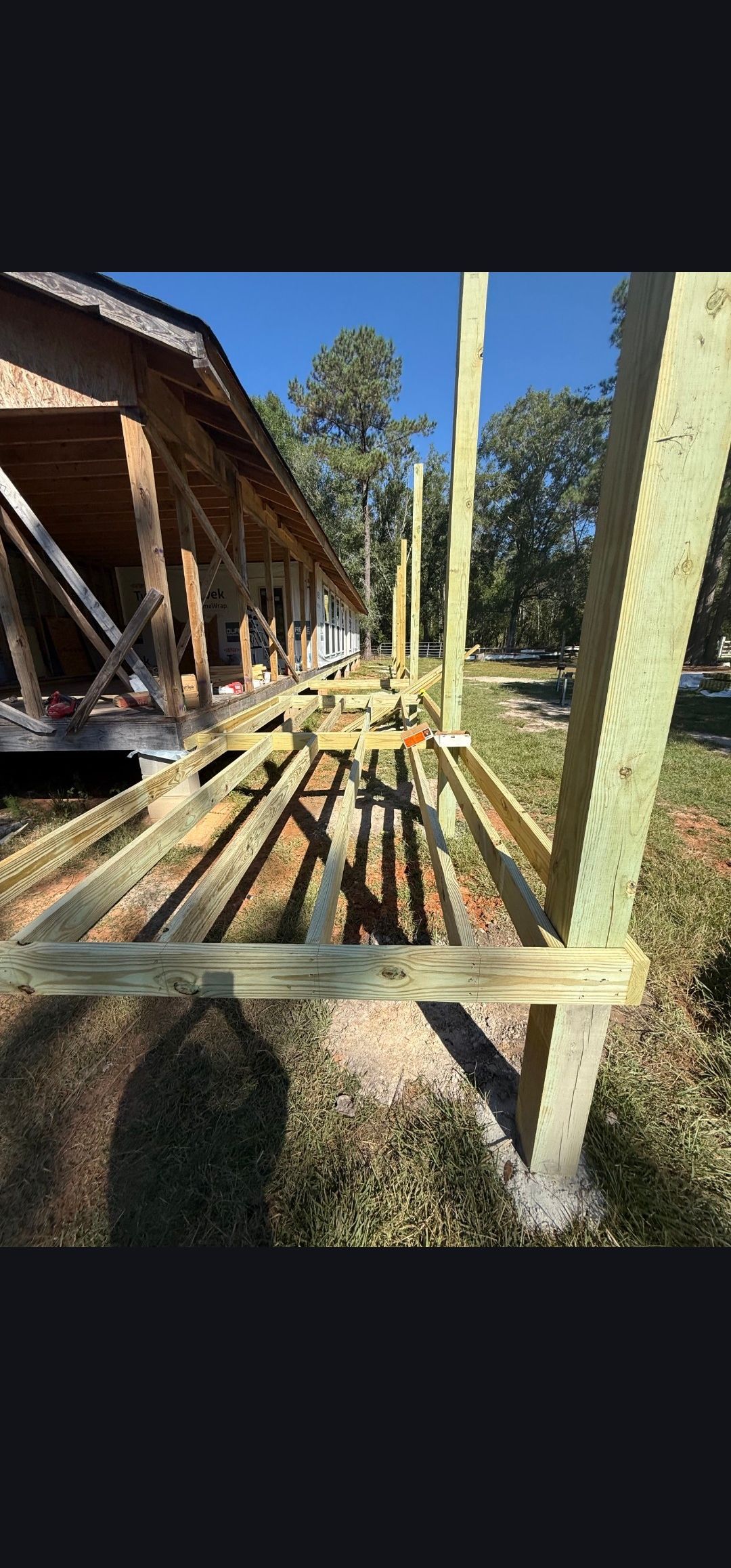
Demolition work includes breaking down structures into manageable sections, separating materials for disposal or recycling, and removing footings or foundation elements that would interfere with new construction. Equipment selection depends on structure size and site access, with hand demolition used in areas where machinery could damage landscaping or adjacent features. Concrete is broken and hauled off-site, wood structures are dismantled with attention to fastener locations that could cause injury during handling, and metal components are separated for scrap recycling.
After removal, the site is cleared of debris, nails, and small fragments that could injure people or damage lawn equipment, and the ground is leveled to prepare for the next phase of work. For repair projects, you'll notice structural stability is restored, damaged sections no longer pose safety risks, and repaired surfaces match the appearance and function of surrounding areas. Deck repairs might involve replacing individual boards and reinforcing support structures, while concrete repairs include patching cracks, resurfacing damaged sections, or rebuilding edges that have crumbled.
The scope of work is determined by safety requirements and how the space will be used moving forward. Some structures are better removed entirely than repaired incrementally, particularly when rot or structural damage affects load-bearing components. Access requirements and debris removal logistics are planned before work begins to prevent lawn damage from equipment or material staging.
Questions Before Starting Your Project
Property owners typically need guidance on when repair makes sense versus full replacement and what the removal process involves for their specific outdoor features.
What determines whether an outdoor structure should be repaired or completely removed?
Structural integrity is the primary factor—if support posts, beams, or foundations are compromised, repair costs often approach replacement costs while delivering a shorter remaining lifespan, whereas surface damage with intact structure often justifies targeted repairs.
How is demolition work performed without damaging surrounding landscaping in Prairieville?
Hand tools are used near planted areas and delicate features, protective barriers shield adjacent structures, and debris removal paths are planned to avoid repeatedly crossing lawn areas, with plywood used for equipment access routes when necessary to distribute weight.
When should removal happen relative to planning new outdoor construction?
Removal is completed before new design work finalizes so the cleared site reveals actual conditions—drainage patterns, soil stability, and utility locations—that affect new construction planning and material requirements.
What's involved in repairing concrete patios versus removing and replacing them?
Surface cracks and minor spalling can be patched and resurfaced if the underlying slab remains structurally sound and properly graded, but extensive cracking, settling, or base failure usually indicates full replacement will deliver better long-term performance.
How are materials disposed of after removal from residential properties?
Concrete and masonry are hauled to recycling facilities where they're crushed for aggregate use, wood is separated based on treatment type with untreated lumber sometimes recycled and treated lumber disposed of according to regulations, and metal components are separated for scrap recycling to minimize landfill waste.
Crescent City Solutions evaluates existing outdoor structures to determine the most cost-effective approach—repair, partial replacement, or full removal—based on safety, remaining lifespan, and how the restored space will be used. Contact us to arrange a site visit where we can assess damage, explain your options, and provide recommendations specific to your property's conditions.