
Durable Surfaces for Residential Outdoor Use
Custom Concrete Work in Prairieville for properties requiring patios, walkways, and functional outdoor hardscaping
Concrete installations serve as foundational elements for outdoor living spaces, providing stable surfaces for furniture, foot traffic, and structures that require level support. Properly prepared and poured concrete resists cracking under load and seasonal movement while maintaining drainage away from the home. Custom layouts accommodate property-specific conditions like slope, existing landscaping, and access points. Crescent City Solutions installs residential concrete in Prairieville with attention to site preparation and finishing techniques that produce clean, long-lasting surfaces tailored to each property's outdoor design.
Site preparation determines performance—subgrade must be compacted to prevent settling, base material provides drainage beneath the slab, and proper thickness accounts for intended use and soil conditions. Prairieville's clay-heavy soils expand and contract with moisture changes, making adequate base preparation and control joints necessary to manage movement without widespread cracking. Concrete mix design, curing time, and finishing methods all affect final surface durability and appearance.
Request a concrete project estimate to review site-specific installation requirements and layout options.
Our Services
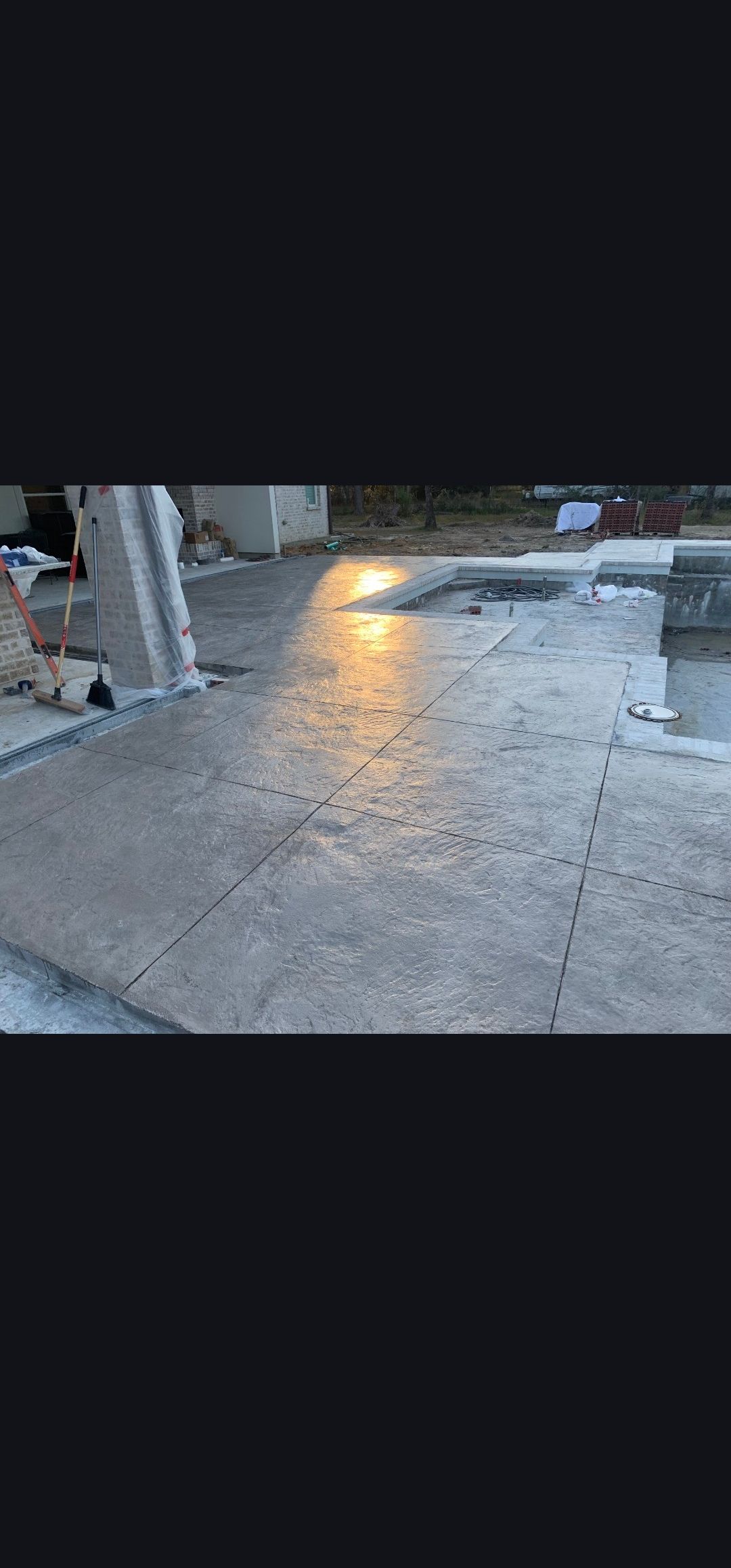
What Proper Concrete Installation Requires
Professional installation begins with excavation to stable subgrade depth, followed by compacted base material that prevents voids beneath the slab. Forms are set to precise elevations that direct water away from structures, and reinforcement is positioned to control crack location and width. Concrete is placed in sections sized appropriately for finishing before initial set begins, and control joints are cut or formed at intervals that manage shrinkage cracking predictably.
Once cured, you'll notice a stable surface that doesn't shift underfoot, consistent drainage that prevents pooling during rain, and clean edges that define boundaries between hardscaping and landscape areas. Properly installed concrete handles outdoor furniture weight, vehicle traffic where appropriate, and seasonal temperature swings without heaving, settling, or developing trip hazards at joints. Finishes remain intact under sun exposure and moisture contact rather than flaking or spalling prematurely.
Concrete projects extend beyond basic slabs—decorative finishes add texture or color, stamped patterns replicate natural materials, and integrated features like steps or borders eliminate seams where separate elements would otherwise meet. The installation process also includes sealing options that protect against moisture penetration and surface staining, particularly for patios or walkways subjected to regular use and weathering.
Answers to Frequent Service Questions
Property owners planning concrete installations typically ask about site preparation, longevity, and finishing choices before committing to specific designs.
What site preparation prevents concrete from cracking or settling after installation?
Proper preparation includes removing unstable topsoil, compacting subgrade to eliminate voids, installing aggregate base for drainage, and accounting for expansive clay soils common in Prairieville by using adequate thickness and reinforcement.
How are control joints used to manage cracking in large concrete areas?
Joints are cut or formed at intervals based on slab thickness, creating intentional weak points where shrinkage cracks will occur predictably rather than randomly across visible surfaces, keeping cracks narrow and aligned.
What decorative concrete options work for residential outdoor spaces?
Finishes include broom texture for slip resistance, exposed aggregate for natural stone appearance, stamped patterns that replicate brick or slate, and integral color or staining that adds visual interest beyond standard gray.
When should concrete be sealed, and what does sealing actually do?
Sealing typically occurs after initial curing completes, creating a barrier that reduces moisture absorption, resists staining from spills or organic debris, and slows surface wear from foot traffic and UV exposure.
What factors determine how long concrete takes to cure before it can handle full use?
While concrete reaches walking strength within days, full curing to design strength takes weeks and depends on temperature, humidity, and mix design—heavier loads like vehicles require longer cure times than foot traffic or furniture placement.
Crescent City Solutions customizes concrete installations based on your property's grade, soil conditions, and intended use. Contact us to schedule an estimate that addresses site-specific requirements and design preferences.